
Not every period in your career is a period when you play better, score more goals and go further up the ladder. That sounds logical. But when you’re in the middle of such a period, it feels different. Not every football career runs in a straight line upwards..
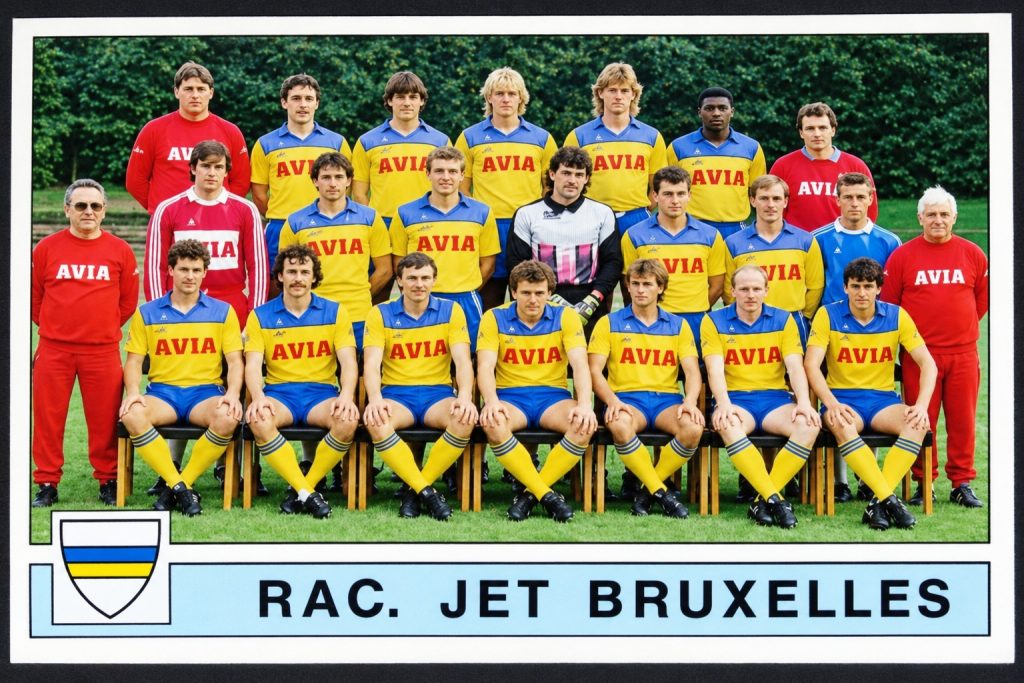
After PSV and Sporting, I followed three shorter periods at FC Groningen, Racing Jet Brussel and Ikast. Periods in which I felt that I was no longer the Rob McDonald I had been before. Less game rhythm, recurring knee problems and football techniques that didn’t always allow me to perform at my best. Yet I continued. Not because I knew which opportunity would come next. Quite the opposite. In Brussels and Denmark, I had no idea that my boyhood dream was closer than ever before. That makes this period for me (in retrospect) so valuable.
Three short phases
After Sporting Lisbon, I had three successively shorter spells at FC Groningen, Racing Jet Brussels and Ikast in Denmark. Beautiful clubs, new countries, good people and special experiences. But looking back honestly, I wasn’t the Rob McDonald I’d been before in terms of football.
I wasn't feeling very well. My body wasn't always cooperating. My knee started acting up again. And because I had played relatively few matches at Sporting, I didn't regain the level of match rhythm I was used to.
At Racing Jet and later at Ikast, I also noticed again how important the environment and the way of playing are for a striker. I was brought in to score goals, but in my opinion I was given too few balls in the places where I could be dangerous.
That is also a setback in professional football. It’s not always one big blow. Sometimes it’s just a period when several things don’t go right at the same time. And it was precisely there that I learned something that I would later often recognize: A career doesn’t care about the story you would like to write yourself.
Back to FC Groningen on a rental basis
After Sporting Lisbon, I returned to FC Groningen on a rental basis.
There was a special interplay there. In Groningen, I actually took over Peter Houtman's place, while Peter was supposed to fill my spot at Sporting Lisbon.
And it got even more coincidental. I even took over Peter's house in De Wijert in Groningen.
Of course, I knew FC Groningen very well. I had had a very nice period there before. We played in European football. I scored goals. I developed as a striker and eventually earned the move to PSV.
But returning to the same club doesn't automatically mean that you return as the same player.
Rob Jacobs was already a coach by then. I have to admit: I wasn't the Rob McDonald who had previously played European football there.
At Sporting, I didn't play many matches. That's something you notice as a player.
You can only train match rhythm to a certain extent. A striker needs matches. You have to feel timing. You have to play duels. You have to find that fraction of a second in which you are in front of a defender with the ball. It wasn’t easy for me because of that.
And then my knee problems came back again. My knee has actually played a role throughout my entire career. Sometimes it went well for a long time, and then suddenly it would flare up again. That happened again now.
When you haven't played much, aren't quite at your best yet, and then also start experiencing physical complaints, it becomes more difficult to quickly become the player you were before.
My return to Groningen was therefore not what my previous period there had been like.
In the end, I left again.
Raymond Goethals and Racing Jet Brussels
I went back to PSV for a short time and completed the rest of my contract there.
Then I had to decide again:
What now?
In the preparations for the new season, an opportunity arose in Belgium.
I had a conversation with Raymond Goethals.
For those who don't know him: Goethals was an icon in Belgian football. At Racing Jet Brussels he had an important technical role, more or less as technical director.
What a fanatic guy.
I still remember that I was especially happy that I could understand him reasonably well.
Anyone who has ever heard Raymond talk might understand what I mean.
We finally reached an agreement and so I left for Brussels.
Back to abroad again.
New city.
New team.
New opportunity.
Again something coincidental
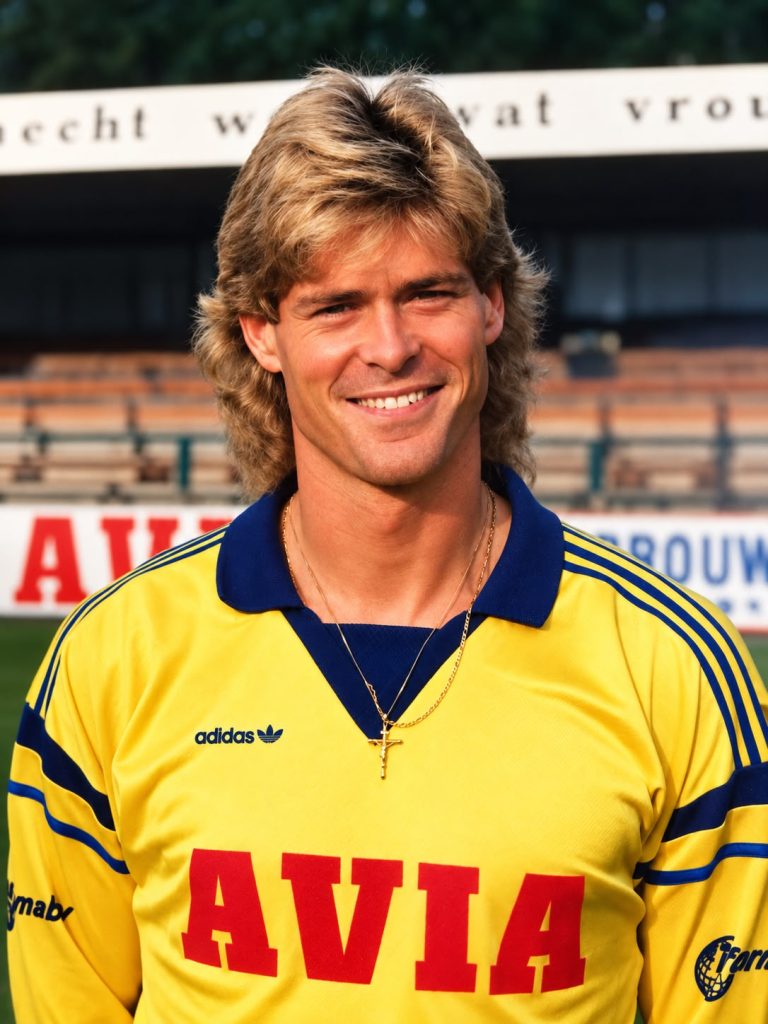
And again, something strange happened with my housing situation. In Groningen, I had taken over Peter Houtman’s house. Now, in Brussels, I took over an apartment from another Dutchman: Mart Van Duren, a former player for PSV. That turned out to be a smart choice in hindsight.
I ended up in an area where Dutch was spoken. In a city like Brussels, that made everyday life a lot easier for me.
Our coach was Daniël Reinders.
A young trainer.
Smart.
Correct.
Someone with whom I could work well.
But the composition of our group of players was extraordinary.
About fifty percent of the group spoke French. The other half spoke Dutch. You could feel it. Not only in the language. You could also see and feel it in the locker room and the way the players interacted with each other. It was as if there were two worlds within one team. That didn’t always make it easier to function as one team.
Bobby Hosker helped me in Brussels
Fortunately, I had a very good relationship with the Englishman Bobby Hosker.
That was pleasant for me. We spoke the same language and Bobby also spoke French fluently.
That helped a lot.
When you move to another country, adapting involves much more than just football.
You have to learn to understand how people interact with each other.
The language.
The humor.
The culture.
The habits.
And meanwhile, of course everyone expects you to just perform.
That's part of professional football.
Right away, Standard Liège out
Our first match was immediately a away match against Standard Liège.
A top team.
I still remember thinking:
Oh yeah, what do we get now?
But then we won 1-2. And I scored one of the two goals. Then you naturally think: this is going well. Daniël was happy. Goethals was happy. I had scored my goal. We had won at Standard. You can hardly start better.
But that game turned out to be one of the few real highlights of that period when you look at our game and at the team spirit.
It was getting increasingly difficult.
We had matches where we still managed to score points at the last minute.
We lost too many of them too often.
And as a striker, I started to encounter a problem that became increasingly frustrating.
I hardly got any chances from the flanks.
That is important for a striker.
You can work hard.
You can move.
You can make room.
But in the end, the ball has to come.
I was brought to Racing Jet to score goals. You have to be in situations where you can score.
In my opinion, that wasn’t done enough.
It's too easy to say: It was the fault of the others. That's not how football works. I wasn't at my best myself. I wasn't physically at my peak. My knee was causing problems again. I hadn't played much before. So various things came together.
In the end, the chairman chose to let me leave again.
Ikast
Fortunately, a new opportunity came along at Ikast in Denmark.
I had contact with Michael Birkendal, who had previously played for FC Twente and was at that time playing for Ikast football club.
Michael told me how it went in Denmark.
How the football was there.
How life was.
And I had to be honest with myself.
I thought:
Rob, take this opportunity.
Because I also knew that at that moment not all sorts of clubs were jumping at the chance to take me over.
You have to be as realistic as possible.
There are moments in a career when you can choose from ten options.
And there are moments when you especially need to look closely at what the chances actually are.
At that moment, I was more in that second situation.
We discussed the contract.
We reached an agreement.
So I left for Ikast.
Beautiful country
Denmark immediately struck me as a country.
What a beautiful country.
And above all: what wonderful people.
I felt very welcome.
People invited me to their homes.
The contact was warm and easy.
And there was hardly any problem with the language either.
The Danes spoke excellent English.
That made it a lot easier for me to find my place, of course.
Our coach was Ole Brandenborg.
Also a young coach.
I got along well with the guys on the team.
That has actually been the case throughout my entire career.
Overall, I was able to adapt fairly easily to groups and usually had a good relationship with my teammates.
But in football terms, the same problem arose again.
It didn't work out.
That might be the simplest way to put it.
I experienced the same thing as with Racing Jet.
Not good enough
It wasn't good and not good enough.
When I put my return to FC Groningen, Racing Jet Brussel and Ikast in sequence, I see three relatively short periods in which the footballing technical performance was less good.
That was new to me!
Not that I had never faced adversity before.
Of course I do.
Injuries, for example.
But my career had until that moment mostly followed a clear upward trajectory.
Wageningen.
Willem II.
FC Groningen.
European football.
PSV.
National champion.
Sporting Lisbon.
And then suddenly a period where things no longer proceed automatically.
That happens in sports.
And actually also in ordinary life.
You might think that you have found a route.
But then something changes.
Your body.
Your environment.
Your employer.
Your trainer.
Your role.
Your trust.
And suddenly what used to work no longer works…
A career writes its own stories
Therefore, for me, the most important thought from this entire period is:
A career doesn't care about the story you would like to write yourself.
You can have a plan.
You can work hard.
You may have previously proven what you are capable of.
And yet there may come a time when you play less, your body doesn’t cooperate, your form is less good, or a particular club doesn’t suit you as well.
That doesn't automatically mean that your story is over.
But it does require a certain amount of effort from you.
Honesty.
Adaptability.
Perseverance.
And sometimes also accepting that at that moment you are not the best version of yourself.
Always look at things from both sides
What I took away from that period is that as a player you always have to keep looking at two sides.
On the one hand, you can be critical of your surroundings.
Does the system suit me?
Will I get the balls I need?
Are my skills being used?
Am I in the right place?
But you also have to look at yourself.
Am I fit enough?
Am I doing everything I can?
How am I feeling?
How do I react to adversity?
What can I change?
That balance is important.
Engaging yourself in everything is not healthy.
But blaming others always doesn't help you either.
What young players can learn from this
For young players, perhaps this is exactly what is important to know:
Your career is unlikely to just keep going up.
Almost no one does that.
There will be moments when you think:
I would have expected this.
Maybe you play less.
Maybe you'll get injured.
Maybe you end up in a club where your skills don't come across as well.
Maybe you just don't feel comfortable in your own skin.
That doesn't have to be the end right away.
Stay honest.
Keep watching your own share.
Keep working on your body and your game.
And don't jump to the conclusion that your best period is behind you too quickly.
At Ikast, I didn’t know at all what would happen next.
And that may be the most important part of this story in retrospect.
Your next goal?
Perhaps your career, studies, work, or life is going differently right now than you ever imagined.
My question to you is:
Do you let a less favorable period determine how your story ends, or do you keep working on what your next step could be?
A career doesn't care about the story you would like to write yourself.
But you do have influence on how you react when things don’t go as planned.
When I was at Ikast, I didn't know what my next club would be. It was a new life with uncertainties again.
I only knew that I didn't want to give up.
I wanted to return to a level where I could be valuable again.
I wanted to play.
Performing.
Once again, it was the Rob McDonald I knew was still around somewhere.
And then came an opportunity that touched something that had been simmering inside me for a long time.
How that happened and why that step meant so much to me, I will tell in my next blog.
In the next blog I will take you to England.
Newcastle United.
A boy's dream that became reality!
.
Would you like to read more honest stories, lessons and insights from my life as a professional footballer?
Then look at my Other blogs on this website
And don't want to miss new stories and life talks from The Next Goal? Then follow the video podcast The Next Goal and Subscribe to the channel.
The Next Goal is not just about what you achieve, but about who you become along the way.
 Dutch
 English
 German
 Portuguese