
There I was, on the PSV pitch. I had signed a two-year contract and walked from the players' tunnel towards the centre circle. Along the way, I literally pinched my arm.
Was this real? Via Cambuur, Wageningen, Willem II and three seasons at FC Groningen, I had developed step by step. In my final year in Groningen, I scored seventeen goals. The extra strength training in Leeuwarden, dealing with injuries and the choice to keep investing in my body had made me stronger. Ultimately, those choices brought me to PSV.
But as I walked towards the halfway line, I wasn't just thinking about how far I had come. The most important question was: how am I going to handle things here?
I had reached the summit. At the same time, I felt that I had to start all over again.
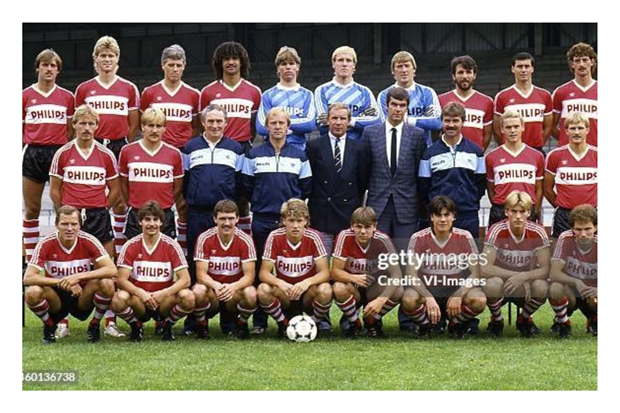
Photo: GettyImages / PSV
The transfer was not an end point
In the previous blog, I mentioned that a transfer often makes visible what you had already built up months or years earlier. To the outside world, my move from FC Groningen to PSV might have been the big moment of success. For me, it was mainly the beginning of a new test.
PSV had clear ambitions. The club signed Eric Gerets and Ruud Gullit. With that, a powerful signal was sent to the rest of Dutch football: PSV wanted to become champions.
They were not the only big names. Hans van Breukelen was in goal. In defence played, among others, Jan Heintze, Ernie Brandts, Huub Stevens and Glenn Hysén. In midfield we had players like Ton Lokhoff, Frank Arnesen, Michel Valke and Willy van de Kerkhof. Up front were René van der Gijp and Hallvar Thoresen.
Our head coach was Jan Reker. Hans Kraay senior had a prominent presence in a role that you might now describe as that of technical manager. Guus Hiddink was also part of the staff as an assistant, still at the beginning of the coaching career that would later make him famous all over the world.
So I didn't just end up in a good selection. I stepped into an environment full of internationals, experienced professionals and outspoken leaders.
That is an important difference. At a smaller club you can stand out quickly through your qualities. At a top club almost everyone has special qualities. There you have to show every single day that you can handle the level.
My first season at PSV started in training
The training sessions were intense. Especially during the tactical games, you had to give it your all. If you made a mistake, you were told about it straight away. Not because people wanted to break you down, but because the standard was high and everyone wanted to win.
There were plenty of leaders around. Players who demanded a lot of themselves, but also of their teammates. They wouldn't accept it if you went into a challenge half-heartedly, lost focus for a moment or thought you could slack off a bit during a training session.
I found that lovely to experience.
In such an environment you discover that elite sport is not just about what you show on Saturday or Sunday. The level of the match is determined during the week. The intensity of a training session, the sharpness in a practice match and the way players correct each other together form the culture of a team.
For young players, such a high standard can sometimes feel threatening. You might think that criticism means you are not good enough. But within a strong elite sports culture, a sharp reaction can also mean something else: we need you, so keep your mind on the job.
It is important that corrections remain aimed at improvement. High demands without trust break players down. High demands combined with clarity, quality and a shared goal can actually lift a team up.
At PSV, I felt how strong that second system could be.
Changing from 4-3-3 to 4-4-2
I also had to relearn the tactics. At FC Groningen, I’d played a lot in a 4-3-3 formation. That suited me well as a centre-forward. At PSV, I switched to a 4-4-2.
A different system means more than just being positioned somewhere else on paper. Your running movements change. The space around you changes. You have to make different choices in and out of possession. Furthermore, the partnership with the striker alongside you becomes more important.
With Hallvar Thoresen I had an ideal partner up front. We differed as players and made clear agreements. Who came to the ball? Who looked for the space behind the defence? Who pressed first? Where did we expect each other during a cross? Who went to the near post and who to the far post? We had a perfect mutual understanding!
When such arrangements are clear, you don’t have to be constantly thinking during a match. You’ll start to recognise each other’s movements. This allows you to react more quickly, and the front line becomes more than just two good strikers playing together.
Our way of applying pressure also helped the rest of the team. On paper, Ruud Gullit often played centrally at the back, but he could easily step up. He had the strength, technique and vision to become dangerous and score goals from that position.
That showed me once again that a tactical system is never just about numbers. You can write 4-4-2 on a board, but ultimately it’s all about the players’ qualities, their understanding of each other’s roles and their willingness to work for one another.
Adapting does not mean that you have to lose yourself. My role changed, but my qualities as a striker remained important. I had to learn how to use those qualities within a different structure.
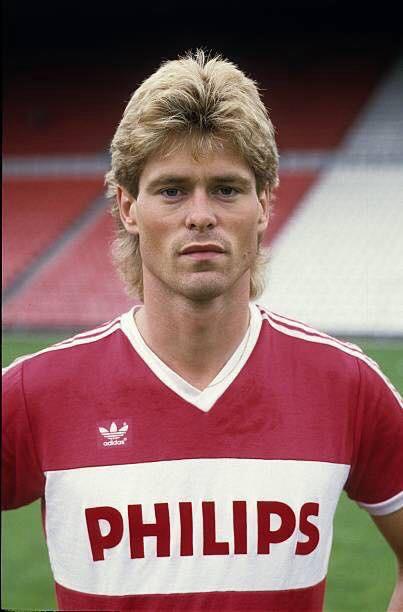
Becoming champions with PSV
The season went particularly well in the league. We lost only one league match, away at FC Den Bosch, and became national champions well before the end of the season.
Becoming a champion is hard to capture in a single moment. People see the decisive match, the trophy and the celebrating players. But a title is built from many smaller moments: a training session where nobody lets up, a match that you win professionally, a teammate who makes up for your mistake and the discipline to stay sharp even against a less appealing opponent.
For me personally, it was special. The boy from Hull, who had once started at the bottom of the ladder as an apprentice, suddenly became a champion in a respected football country. I played with true top players, was guided by top people and felt the support of a friendly yet passionate PSV crowd.
I scored fifteen goals in 25 league matches. That was good, but in my own eyes not top-tier. As a striker, you always want more. You think about the chances that could have gone in and the matches in which you would have liked to have been more decisive.
Yet I also learned to look honestly at my performances. Fifteen goals in my first season at a top club was a serious contribution. Being satisfied with what went well does not have to mean that your ambition disappears. You can appreciate what you have achieved and at the same time feel that there is more in you.
That balance is important. Whoever can never be satisfied ultimately enjoys nothing. Whoever is satisfied too quickly stops growing.
Not every goal was achieved
Although we became champions, not everything went to plan. In the KNVB Cup we were knocked out by Feyenoord. Nor did we get as far in Europe as we had hoped.
In the first round of the UEFA Cup we won convincingly against Avenir Beggen. In the second round we faced Dnipro Dnipropetrovsk, at the time a club from the Soviet Union and nowadays associated with present-day Ukraine. At home it ended 2-2. I scored one of our goals. In the away match we lost 1-0, which brought our European adventure to an end.
That contrast goes with elite sport. You can become national champions in the same season and still be disappointed about the cup and Europe. Success does not wipe out disappointment. Neither does disappointment render success worthless.
As a player, you have to learn to hold multiple truths at the same time. We had a great league season. We didn't achieve everything that seemed possible. I had a good first year. Personally, I wanted to contribute more.
It is precisely that tension that often keeps elite athletes moving.
Learning from Ruud Gullit off the pitch
My development at PSV did not only take place on the training pitch. In the beginning, I lived with the Swedish defender Glenn Hysén, his wife and their child. Glenn was a lovely man and spoke excellent English. That made my transition easier.
Later I got my own house in Son and Breugel. By then I had been living in the Netherlands for years, but still often spoke English. Dutch people switch easily. That is nice, but it also meant that I myself felt less need to learn the language properly.
During a meal at the training ground, Hans Kraay senior spoke English again while explaining something. At one point Ruud Gullit asked, and rightly so: why do you always speak English?
Later Ruud Gullit told me that I had to learn Dutch if I was planning to stay in the Netherlands for a longer period. He was right.
Language is not just about understanding words. Language helps you to become part of a group and a country. You understand jokes quicker, grasp nuances better and are able to state more clearly what you think yourself. If others constantly adapt to you, you can inadvertently remain on the fringes of a group.
Later, Ruud Gullit told me that I had to learn Dutch if I planned to stay in the Netherlands for a longer period. He was right.
For me, that was a lesson in responsibility. A club had to help me function properly, but I also had the task of adapting to my surroundings.
Ruud was only 23, but was ahead of his years in his thinking on many points. During another meal, he asked questions about the food that we as professional players were given. He felt that certain fried meals did not fit with what top-level athletes needed. He also contributed ideas regarding our match kit.
That might seem like a detail, but it was precisely in that that you recognised his professionalism. He looked beyond the training and the match. He understood that performance is influenced by nutrition, recovery, presentation and the way a club treats its players.
Nowadays we consider such topics normal. Professional clubs have nutritionists, chefs, recovery programmes and extensive guidance. In those days, that was much less self-evident. Ruud saw early on that surviving and performing in top-level football requires attention to the big picture.
I learned from that that leadership does not depend on age. Sometimes a young player sees what could be improved sooner than the rest. The question then is whether he has the guts to speak up and whether those around him are willing to listen.
What young players from my first season at PSV can learn
My first season at PSV ended with a championship. That is the part that stays in the statistics. The deeper lessons for me were about starting over, adapting and taking responsibility.
A transfer to a bigger club doesn't prove that you've already made it. Your reputation or goal tally from the previous season might get you into the dressing room, but after that you have to perform all over again.
I take five lessons away from that period.
At the top, the standard is redefined again
What was exceptional at your previous club can be normal at a top club. Don't let that discourage you. Use the level around you to become better yourself.
Adaptation is a form of strength
I had to switch from a 4-3-3 to a 4-4-2 and learn to work alongside a second striker. It’s important to stay true to your strengths, but sticking rigidly to a single role can limit your development.
3. Read off the pitch
Ruud's comments on language and nutrition weren't directly about goals. Still, they made me more aware of what professional life entails. Sometimes the most important coaching comes during a meal or an informal chat.
4. Find partners who bring out the best in you
My cooperation with Hallvar Thoresen worked because we made agreements and learned to understand each other's play. Individual quality becomes stronger when players truly learn to work together.
5. Be honest about your own performance
Fifteen goals in 25 league matches was good. Still, I felt that more was possible. Honest self-reflection is different from constantly rejecting yourself. Look at what went well, acknowledge your contribution and then determine where your next area for growth lies.
Your next goal?
Perhaps you’ve worked hard to reach a certain level, join a particular team, secure a contract or achieve a specific goal. In that case, it can be tempting to think you’ve made it.
But a new environment raises new questions. Can you listen again? Can you adapt? Can you learn from people who are further ahead? And do you dare to take responsibility for what you still need to develop off the pitch?
So my question to you is:
Are you mainly just glad that you’ve been given this opportunity, or are you also prepared to start afresh to make the most of it?
A new issue
My first season at PSV brought me a league title, fifteen league goals and experiences that further shaped my view of top-flight sport. I had proved that I could score and perform at a top club too.
But in professional football, time never stands still.
I heard that PSV were interested in Wim Kieft. For a striker, that’s no small matter. It made me think again about my position, my future and the direction I wanted my career to take.
Was this the right time to leave the Netherlands?
I’ll talk about that in my next blog post.
The Next Goal is not just about what you achieve, but about who you become along the way.
FAQ section
When did Rob McDonald play for PSV?
Rob McDonald played for PSV during the 1985–86 season. In his first season at the club, he won the Dutch league title.
How many goals did Rob McDonald score for PSV?
In his first season with PSV, Rob scored fifteen goals in 25 league matches. He also scored twice in the UEFA Cup.
Which top players did Rob McDonald play with at PSV?
He played alongside Ruud Gullit, Eric Gerets, Hans van Breukelen, Frank Arnesen, Hallvar Thoresen, Willy van de Kerkhof and Ernie Brandts, amongst others.
Who was PSV’s manager during the 1985–1986 season?
Jan Reker was the head coach. Hans Kraay senior held a key managerial role, and Guus Hiddink was part of the coaching staff as an assistant.
What did Rob McDonald learn during his first season at PSV?
He learnt that, at a top club, you have to start from scratch. Adapting to a different system, coping with high training standards, working as a team and conducting himself professionally off the pitch were key aspects of his development.
Be sure to read the previous blog posts as well
Would you like to know what led up to my transfer to PSV? Then read on Investing in yourself opens doors: my third season at FC Groningen. In it, I explain how extra strength training, discipline and investing in my body helped me to be ready when PSV showed an interest.
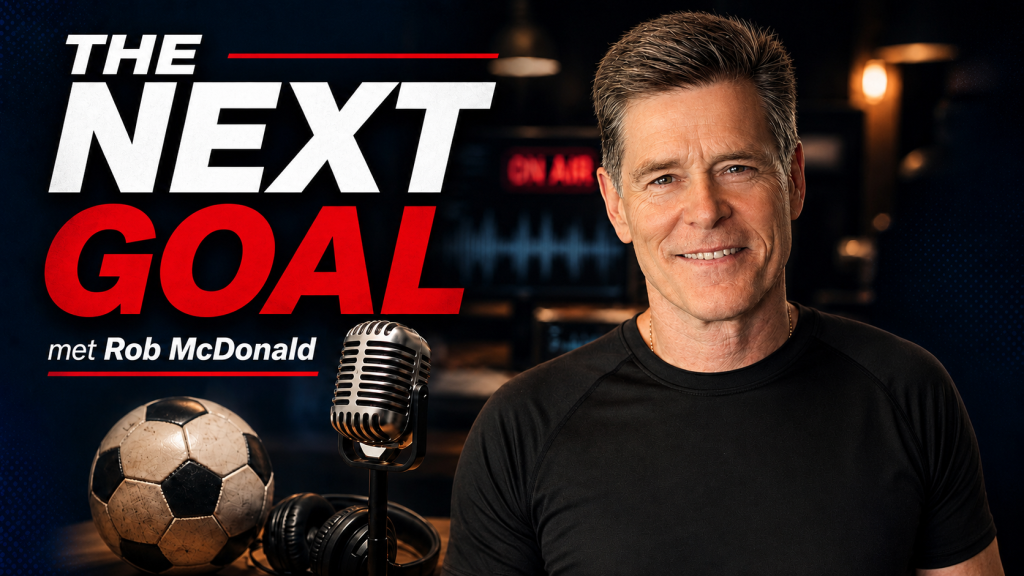
Watch and follow The Next Goal
Would you like more honest stories and practical insights from the worlds of football, elite sport and coaching? Then watch and follow the video podcast *The Next Goal*. Subscribe to the channel so you don’t miss any new episodes: https://robmcpro.com/aanbod/podcast/
 Dutch
Dutch  English
  German
  Portuguese