
What Sporting Lisbon taught me about competition, friendship and moving on
Sometimes in football you make a move and think: this is it. New club. Different country. A great challenge. And then it turns out completely differently from how you imagined... I spent just six months at Sporting Lisbon. Yet I’d do it all again in a heartbeat.
The move to Portugal
In 1986, I left PSV for Sporting Lisbon. It was a very deliberate choice. I’d achieved what I’d set out to achieve: reaching the top of Dutch football. I’d played at the highest level with PSV and felt ready for the next step. The prospect of playing abroad was calling...!
When it also became clear that Wim Kieft would be joining PSV and playing in my position, it gave me an extra nudge in the direction I’d already chosen. I wanted to play abroad, and a loan move to Sporting Lisbon was an option. The loan arrangement also meant PSV could bring me back if they needed to.
I got a phone call from Quim Salvador. He had good contacts at Sporting and told me that João Rocha, the president of Sporting Lisbon, wanted to bring me to Portugal.
That sounded interesting.
I went to Portugal with Henny Weering, whom I knew from my time at Cambuur and trusted.
We met at João Rocha’s home. I had a good feeling about him straight away.
Everything was properly sorted out financially too.
So: off to Lisbon...!
I was given a flat in Oeiras, Manuel José was the manager, and I was ready for a new chapter.
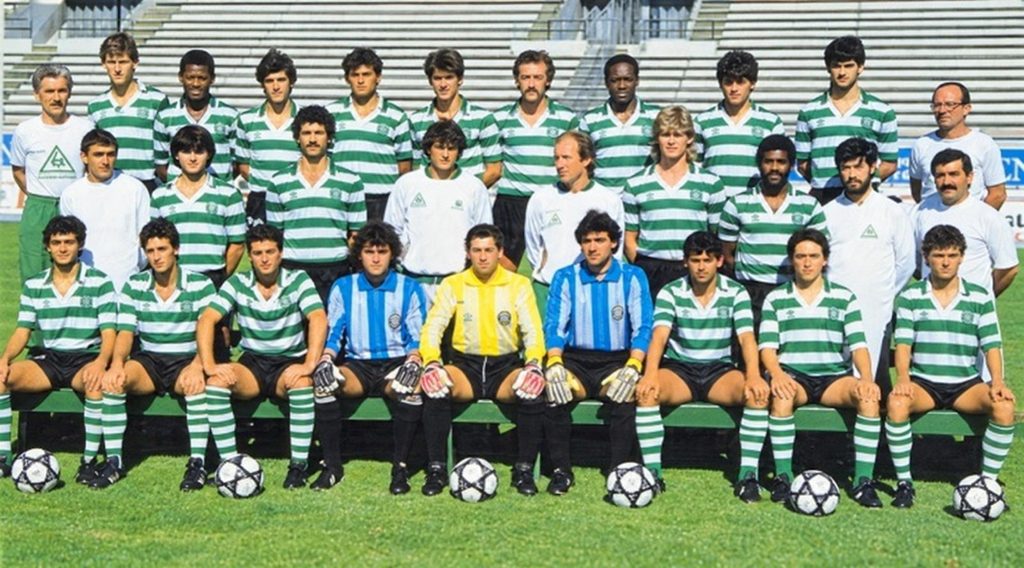
Three foreign players, two places
There was just one problem with the rules.
At the time, clubs in the Portuguese league could only field two foreign players.
As well as me, Sporting had the Mexican midfielder Manuel Negrete. He’d just had an excellent World Cup.
And up front was Raphael Meade, the former Arsenal striker.
My direct rival for a place.
You can probably see where this is going.
Negrete was hugely important in midfield. And Raphael was playing really well. He was scoring regularly too.
So I started on the bench.
There was only one thing for it: train well, stay sharp and make sure I was ready when my chance came.
That sounds very simple looking back.
But as a footballer, of course, you just want to play.
Then came Iceland
Different rules applied in Europe at the time, allowing more foreign players to be fielded.
Here was my chance...
On 17 September 1986, we played away against Akranes in Iceland.
We won 9–0.
I had a good game and scored three goals.
A hat-trick in Europe. That’s something to be proud of.
We won the return leg in Lisbon 6–0, and I scored in that one too.
At a moment like that, you naturally think: now I’ve shown what I can do.
But football is rarely that simple.
Back in the league, I still often found myself on the bench.
A hat-trick in Europe. That’s something to be proud of.
Barcelona
In the next European round, we faced Barcelona.
We lost 1–0 away.
At home, we won 2–1. I came on as a substitute in that match.
In the end, we still went out of the competition.
Of course you’re gutted. But playing against a team like that, sharing a pitch with players of that calibre, stays with you.
Those are exactly the matches that show you where you stand as a player.
But in the end, perhaps you learn even more in football from the times when things don’t go your way.
My biggest rival became a good friend
At one point, I had a conversation with Manuel José.
He had no complaints about my attitude. When I played, I did well.
But, to be fair, Raphael Meade was a very good striker.
You can get angry about that.
You can blame the manager.
You can begrudge your rival every success.
Or you can simply accept it: he’s playing well, and I’ll have to get even better myself.
Raphael and I actually became good friends.
We were rivals because we both wanted to play. But we didn’t have to tear each other down to do that.
Quite the opposite.
We kept each other sharp. We pushed each other on.
And years later, Raphael paid me what might be one of the finest compliments I’ve ever received from a team-mate.
He said that having me there had made him a better player.
Because he knew I was waiting in the wings and could take his place.
That has always stayed with me.
You don’t have to make a rival smaller to make yourself bigger.
Healthy competition can make you both better.
Years later, Raphael paid me what might be one of the finest compliments I’ve ever received from a team-mate.
He said that having me there had made him a better player.
The people in a team
At Sporting, I also became good friends with Mário Jorge and Oceano.
Top players, but above all, lovely people.
Mário was incredibly warm and outgoing.
He really did kiss everyone.
It took me by surprise at first. At one point I thought: what’s going on here?
But that was just Mário.
Warm, open and genuine.
He and Oceano were the sort of players who held a squad together.
All these years later, I’m still in touch with some of those lads.
That says it all, really.
Not everyone who matters is on the pitch
In Lisbon, I also formed a special friendship with Vítor Cândido, a journalist at A Bola.
As a player, you usually learn quite quickly to be a little careful around journalists.
Sometimes with good reason.
But Vítor became a real friend.
In 2025, we met up again in Portugal.
Almost forty years later.
You share old stories, and only then do you realise how much that time meant.
When you’re young, you mostly think about the next match.
Much later, it’s the people you remember most.
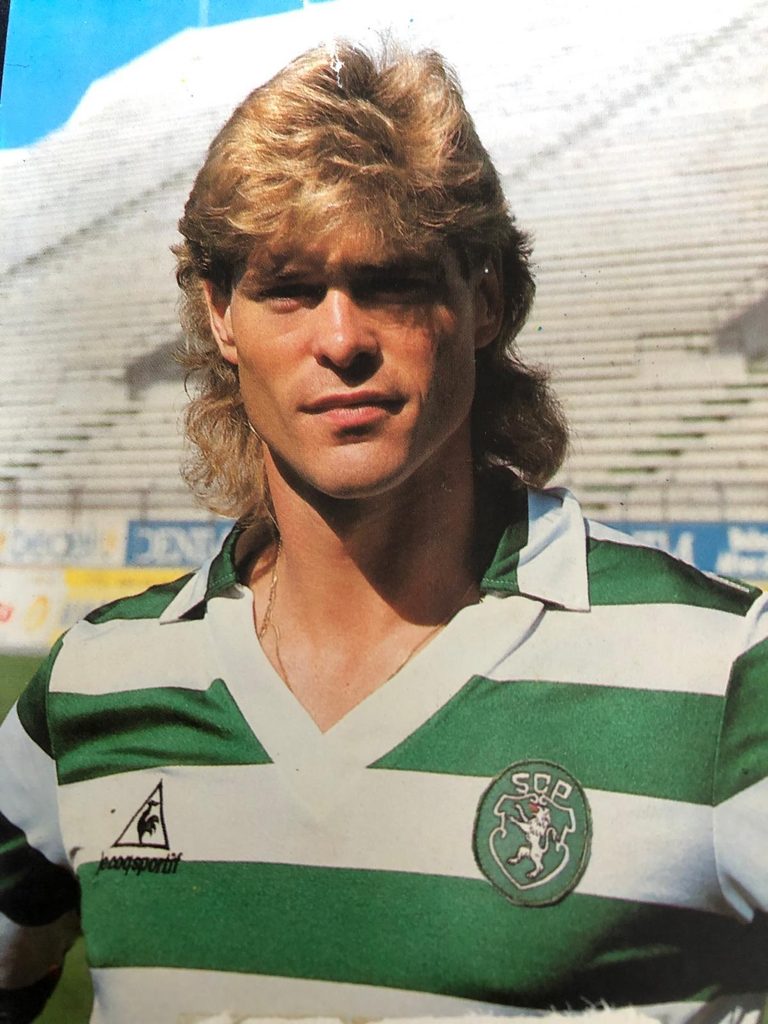
Knowing when it’s time to move on
Eventually, I had another decision to make.
I had to play. I wanted to, and my contract situation made it important too.
Peter Houtman joined Sporting, and I returned to the Netherlands, to FC Groningen.
At the time, it was mainly a practical footballing decision. I needed games.
But looking back, Sporting had given me far more than just football.
I learnt that your value isn’t determined solely by the number of matches you play.
I learnt that a rival doesn’t have to be an enemy.
I learnt how important friendship is in an environment where everyone wants to perform.
And I learnt that sometimes you simply have to accept that someone else is better at that moment.
Without becoming bitter.
That served me well later on in football, in my work and in my life.
How do you judge a chapter of your life?
We often judge a chapter of our lives by the most obvious things.
Did I win?
Did I play?
Did I get that job?
Did it work out as I’d hoped?
But it’s not that simple.
If you only look at minutes on the pitch, my time at Sporting may not have been the most successful spell of my career.
But almost forty years later, friendships from that time are still going strong.
I remember the people.
I still draw on the lessons I learnt.
And, go on then, that hat-trick in Iceland deserves a place in the memory too.
So was Sporting a good move?
Absolutely.
Just for different reasons from the ones I’d imagined beforehand.
Perhaps that’s one of the most important lessons of all.
Sometimes your next goal turns out not to be the goal you’re chasing at the time.
Sometimes it’s really about who you become along the way.
Almost forty years later, friendships from that time are still going strong. I remember the people. I still draw on the lessons I learnt.
Rob McDonald
The Next Goal™
Stories from football about choices, friendship, setbacks and the lessons that stay with you long after the final whistle.
Read the previous posts too
Want to know what led up to my transfer to Sporting Lisbon? Read the previous posts and discover more about the lessons I learnt.
Watch and follow The Next Goal™
Want more honest stories and practical insights from football, elite sport and coaching? Watch and follow The Next Goal™ video podcast. Subscribe to my YouTube channel so you don’t miss a new episode: https://robmcpro.com/aanbod/podcast/