
What young footballers don’t learn on the pitch – but do learn in the dressing room
Every footballer dreams of it.
That moment when you’re no longer just playing youth football, but opening the door to the real football world. A world of contracts, competition, expectations and performances.
For me, that moment came when, as a young player, I got the chance to start as an apprentice at Hull City.
It was the start of a journey that taught me far more than just football.
Because if you really want to understand how the football world works, you can’t just look at what happens on the pitch. You also need to understand what goes on behind the scenes.
And believe me: a lot of the truth lies in the dressing room.
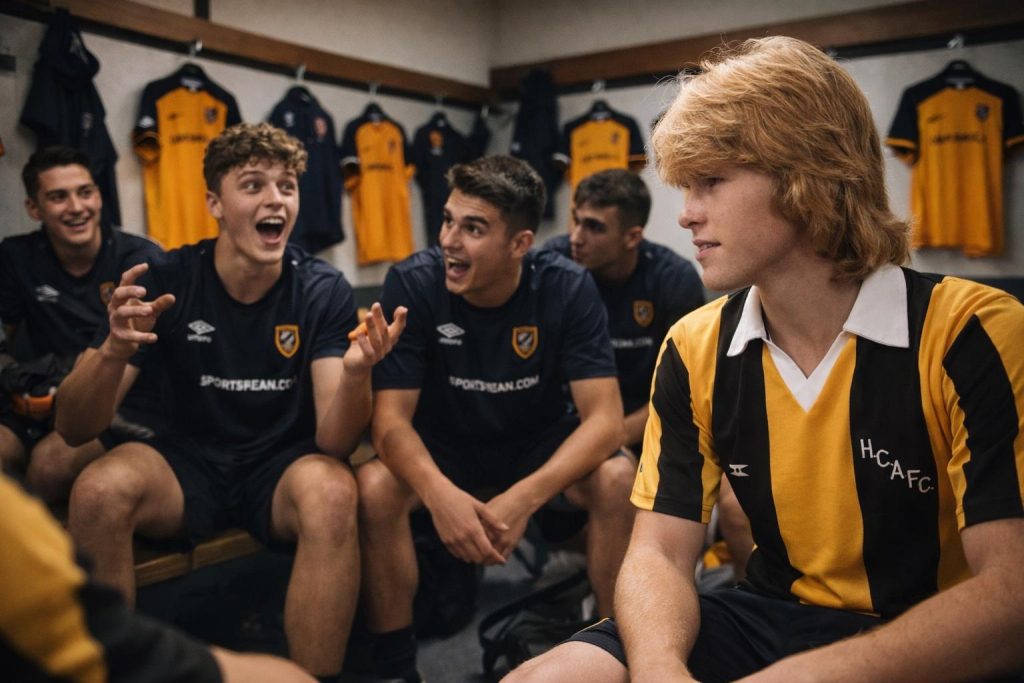
Walking into the dressing room for the first time
I remember it well.
The first time I stepped into the apprentices’ dressing room, it felt completely different from the Sunday youth football I’d come from.
There, you knew everyone. You had a laugh together, trained together, and everything felt familiar.
But here, everything was different.
You walk in and immediately think:
How will these players see me?
How should I behave here?
What’s expected of me?
The group was made up of players from different parts of the United Kingdom. A lot of the lads came from the north of England, particularly around Newcastle. There were also players from Scotland, because Hull City had a link with a football school in Glasgow.
And, honestly, my first challenge wasn’t even football.
My first challenge was understanding what they were saying.

Dialects, culture and team dynamics
Anyone who’s ever spoken to Geordies or Scots knows that it can sometimes feel almost like listening to another language.
At first, I really had to concentrate to follow the conversations. So what did I do? I listened. A lot.
Looking back, that turned out to be one of the smartest things I could have done.
Rather than trying to make my mark straight away, I took the time to observe.
How do the players talk to each other?
How do they respond to coaches?
Who has influence in the group?
Who commands respect — and why?
The dressing room is really a little society of its own.
You’ve got leaders. Quiet grafters. Jokers. Lads who want to prove themselves, and players who already know exactly where their strengths lie.
As a young player, it’s important to understand those dynamics first.
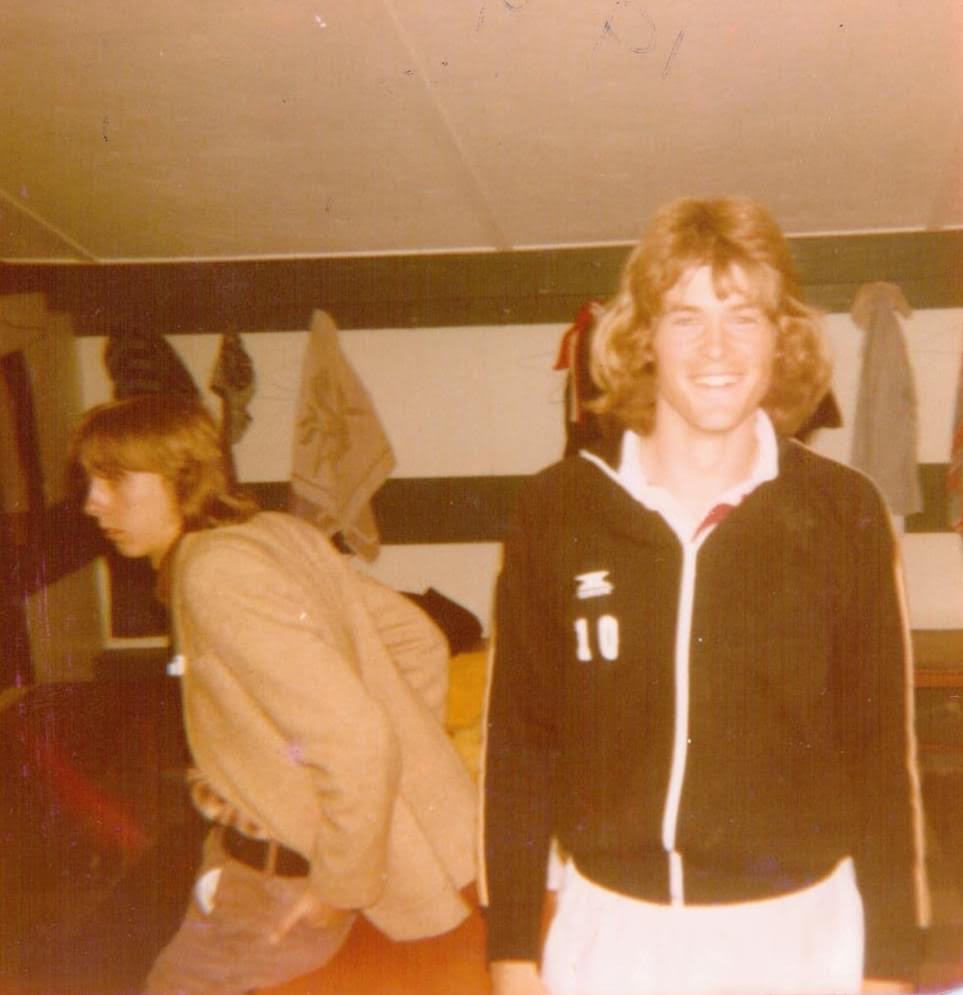
A lesson from my mum
Before I left for Hull City, my mum gave me a simple but powerful piece of advice.
She said:
“Listen carefully to your coaches and the people in charge of you. They’re there for a reason. They know what they’re talking about.”
That advice has always stayed with me.
In a world where so many young players want to make an immediate impression, it’s tempting to come in giving it the big talk. To act tough. To behave as though you’re already owed something.
But I’ve often seen that end badly.
Respect isn’t demanded. It’s earned.
The difference between youth football and professional football
I’d been doing well in the amateur football I came from. I was one of the better players there. You soon get seen as a talent, someone who stands out.
But when I arrived at Hull City, that perspective changed completely.
Suddenly, everyone was good.
Everyone had talent.
Everyone had ambition.
Everyone wanted to turn professional.
And that means starting again.
Your old reputation no longer counts. What you’ve shown before is no guarantee that you’ll make the next step. You have to prove yourself all over again — in training, in matches and in the way you conduct yourself every day.
That took some getting used to, but it also kept me sharp.
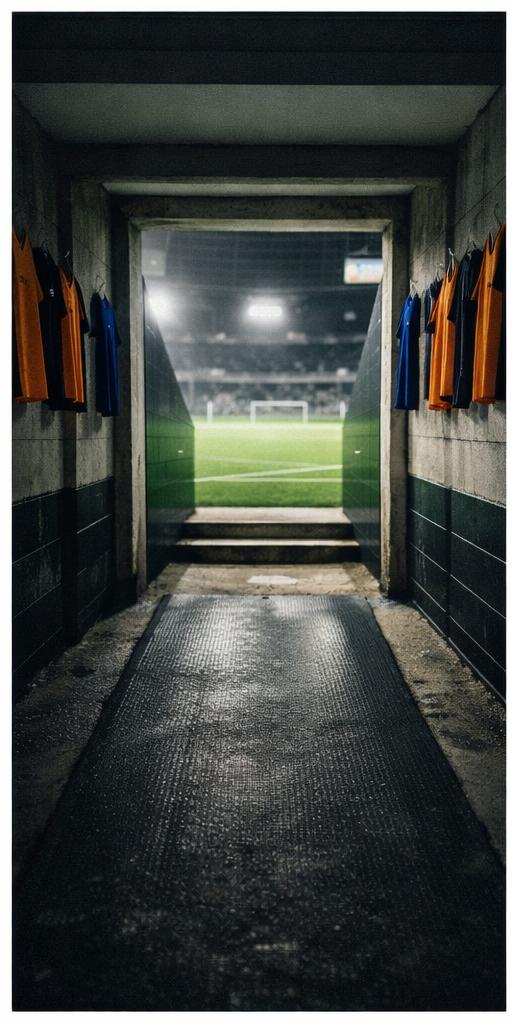
My goal as a young player
From the start, I had one clear ambition: to become the best professional footballer I could possibly be.
Not to be better than others just to impress people, but to keep improving on my own level.
That attitude helped me stay focused.
Because in the dressing room, you’re not the centre of attention. You’re part of a team. And the sooner you understand that, the sooner you can really develop.
What I saw happen to other young players
In those early years, I saw a lot of players come and go.
Not everyone made it.
Some struggled with homesickness. Others didn’t train hard enough. Some couldn’t handle the pressure of matches. And others got into trouble because of how they behaved within the group.
The dressing room can be a tough place. If you don’t fit into the team culture, it often shows very quickly.
That doesn’t mean you have to lose who you are. But you do need to understand that team dynamics and character matter at least as much as talent.
Mental strength matters just as much as talent
Of course, things didn’t always go perfectly for me either.
I had spells when frustration built up. Matches where nothing seemed to come off. Moments when I really felt the pressure.
I vividly remember having to sweep the stand in the freezing cold once and snapping a broom in half out of frustration.
Not my proudest moment.
But it showed me something important: professional football isn’t just about technique, physical ability or talent. It’s also about how you deal with disappointment, pressure and emotion.
Mental strength isn’t an optional extra. It’s essential.
Two years later: my first professional contract
Those first two years were a trial period. A chance to show you could cope with the standard and were ready for more.
And then the moment came.
After two years, I was given the chance to sign a full-time professional contract.
A dream come true.
But it also meant taking the next step: into the first-team dressing room.
And there, once again, you face different rules, different expectations and a different level of professionalism.
The power of listening
When I look back on that time, there’s one habit that helped me enormously: listening.
Experienced players would sometimes offer little bits of advice. A comment about how to deal with coaches. An insight into how to conduct yourself. A warning about how the football world really works.
Sometimes it was only a couple of sentences.
But those sentences were worth their weight in gold.
Why? Because they came from people who’d already walked that path.
The real football world is behind the scenes
A lot of people only see football from the outside.
The matches.
The goals.
The interviews.
The highlights.
But the real football world is often found elsewhere.
On the team bus.
On the training pitch.
During recovery sessions.
And above all: in the dressing room.
That’s where friendships are formed. Where tensions develop. Where character shows. Where you learn how people react under pressure. And where you discover more and more about who you are yourself.
My advice to young players
I’m not saying my way is the only way. Every player has their own path, their own character and their own way of learning.
But if I could give one piece of advice to young players looking to make the step into professional football, it would be this:
Stay calm. Listen. Observe. Learn from the people around you.
Respect other people’s experience, but don’t be afraid to stand up for yourself when you need to.
That balance between respect and self-confidence is essential.

Why I started The Next Goal™
These are exactly the stories I want to share through The Next Goal™.
Not just football’s glamorous exterior, but the reality behind it. The lessons from the dressing room. The mental side of the game. The team dynamics. The little moments that have a big impact on a career.
Because if you really want to get ahead in football, you need to understand how the game is actually played.
Not just on the pitch, but off it too.
Your next goal
Whether you’re a player, coach, scout or simply someone who loves the game, there’s always a next goal.
A next step.
A new challenge.
A chance to grow.
In the coming episodes of The Next Goal™, I’ll take you inside the real football world. With stories, insights and conversations with people who know the game from the inside.
Tune in to The Next Goal™
Don’t want to miss an episode?
Visit RobMcPro.com and follow the podcast The Next Goal™. You’ll also find new blog posts, insights and stories from the world of professional football there.
Because sometimes one good inside pass is exactly what you need to reach your next goal. ⚽
About Rob McDonald
Through RobMcPro and the podcast The Next Goal™, Rob McDonald shares honest insights from the football world. From dressing-room lessons and team dynamics to mental strength and career development, his stories help players, coaches and football fans better understand the game — both on and off the pitch.