
Why training alone doesn’t make the difference
Intro
Many young players think improving starts on the training ground. More drills, better programmes, better coaches. But the reality is different. In my days as a youth player and later as a professional, I found that mental strength in football often matters far more than the training itself.
The question isn’t just what you work on in training.
The real question is: what do you bring as a player, beyond the training?

The reality – from street football to the professional game
When I was growing up in England, it all started in the playground and on the streets. That’s where you learnt creativity, toughness and improvisation. Not by following a programme, but by playing. By losing. By starting again.
Playing amateur football between the ages of twelve and sixteen, training was simple.
A few drills in the park.
A bit of passing.
Sometimes some technical work.
The occasional short sprint.
And then? Games. Six-a-side. Seven-a-side.
It mostly depended on who turned up.
What stood out was this:
There was hardly any focused work on finishing.
Positioning got little attention.
There wasn’t much structure.
Yet players developed. Not because of the system, but despite it.
When I later joined the youth set-up at Hull City, I expected a completely different approach. More structure. More detail. More substance.
But no.
Something struck me there too. We often played games with huge numbers, sometimes even 18-a-side in a sports hall.
There was some light strength training.
The occasional endurance session at the start of the season.
Speed work – often on hard surfaces, which wasn’t ideal.
Here too: little specific tactical coaching.
Little individual development.
Little attention to realistic match situations, such as 11-a-side with clearly defined roles.
And when I turned professional?
Training became more intense, but the basics stayed the same. No groundbreaking new ideas or different approach.
What I realised
In short, if I’m honest, the training programme wasn’t what made me a better player during my time as a young professional in England.
That might sound strange, but it’s the truth.
Many players of my generation, including those at big clubs, had similar training. Yet only a small proportion reached the highest level.
Why?
Because mental strength is what really makes the difference in football.
What I saw, and experienced myself, was this:
Not everyone had the same foundations.
Not everyone had the same drive.
Not everyone kept going when things got tough.
The players who made it had something else.
Not a perfect training programme.
But a strong inner foundation. Unshakeable mental strength: that was what made the difference.
What really matters in football and beyond
What ultimately took me further had little to do with how training was structured.
It was about who I was as a player.
These were my core qualities:
• Physically strong
• Always giving 100% in matches
• Quick over the first few yards
• The will to win
• Never giving up, whatever the situation
• Strong in the air and in physical battles
These aren’t nice-to-have qualities.
They’re foundations.
Scouts always look for specific core qualities. Not just once, but repeatedly. They want to see consistency.
Because you can develop technique.
You can learn tactics.
But character… you see that straight away.
And that doesn’t just apply to football.
At work.
In leadership.
In life.
The question stays the same: how do you respond under pressure?
Core qualities first, then the rest
Training in England has improved enormously since then. There’s more focus on technique and tactics. More structure. More support.
But one thing hasn’t changed.
Your core qualities, combined with mental strength, still determine how far you go.
You can have the best training available, but without the right mindset and physical foundations, you won’t get far.
My real development, improving technically and tactically, came not in England, but in the Netherlands. That’s what my next blog is about.
There, more attention was paid to:
• Tactical awareness
• Positional play
• Refining technique
• Reading the game
That made me a more complete player.
But it was only possible because the foundations were already there.
That’s an important point many young players miss.
They want to work on technique.
They want to get better at playing in different systems.
But they forget the foundations.
In short: success in football doesn’t start with training.
It starts with who you are as a player.
The right environment helps.
Good coaching helps.
But without the foundations, you won’t make it.
With the right foundations, you can keep developing wherever you are.
That’s why I tell players: if you feel your environment is no longer helping you progress, be prepared to move somewhere else, to another city, to another country.
My move to the Netherlands made me a better player.
Because I found what I’d been missing.
Sometimes you have to step outside your comfort zone to really grow.
Ask yourself: are your foundations in place?
Have you got the foundations?
Do you work hard enough?
Do you give absolutely everything in matches?
Do you keep going when things get tough?
Those are the questions that determine how far you go.
Not the programme.
Not the drill.
But your mindset.
In my next blog, I’ll tell you how moving to the Netherlands improved my game technically and tactically.
Stay tuned.

Want more insider tips? Subscribe to my podcast The Next Goal™.
Want more insights like these from life in elite sport and coaching?
Listen to the podcast The Next Goal™ with Rob McDonald, where I explore these lessons in more depth.
Take a moment to reflect on your own development: are you playing to prove yourself, or to grow?
The Next Goal™ isn’t just about what you achieve, but who you become along the way.
Why I started The Next Goal™
With The Next Goal™, these are exactly the stories I want to share.
Not just football’s glamorous image, but the reality behind it too. Lessons from the dressing room. The mental side of the game. Team dynamics. The small moments that have a big impact on a career.
Because if you really want to get ahead in football, you need to understand how the game is truly played.
Not just on the pitch, but off it too.
Your next goal
Whether you’re a player, coach, scout or simply a lover of the game: there’s always a next goal.
A next step.
A new challenge.
A chance to grow.
In the coming episodes of The Next Goal™, I’ll take you inside the real world of football. With stories, insights and conversations with people who know the game from the inside.
Tune in to The Next Goal™
Don’t want to miss an episode?
Visit RobMcPro.com and follow the podcast The Next Goal™. You’ll also find new blogs, insights and stories from the world of professional football.
Because sometimes one good inside pass is exactly what you need to reach your next goal. ⚽
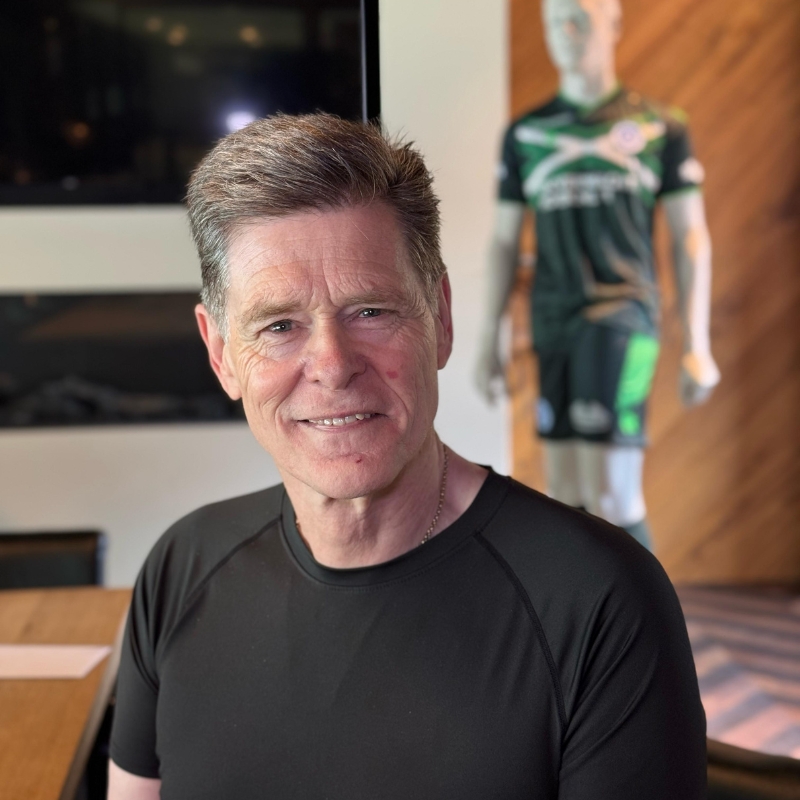
About Rob McDonald
Through RobMcPro and the podcast The Next Goal™, Rob McDonald shares honest insights from the world of football. From dressing-room lessons and team dynamics to mental strength and career development, his stories help players, coaches and football fans understand the game better — both on and off the pitch.