From injuries to Europe: my second season at FC Groningen
My first season at FC Groningen wasn’t easy. I arrived with expectations, but injuries got in the way. I played, I worked hard, but things still weren’t going the way I wanted. Thirteen goals might not sound bad, but I felt I had more in me. Much more. I knew: this still isn’t the level I want to reach.
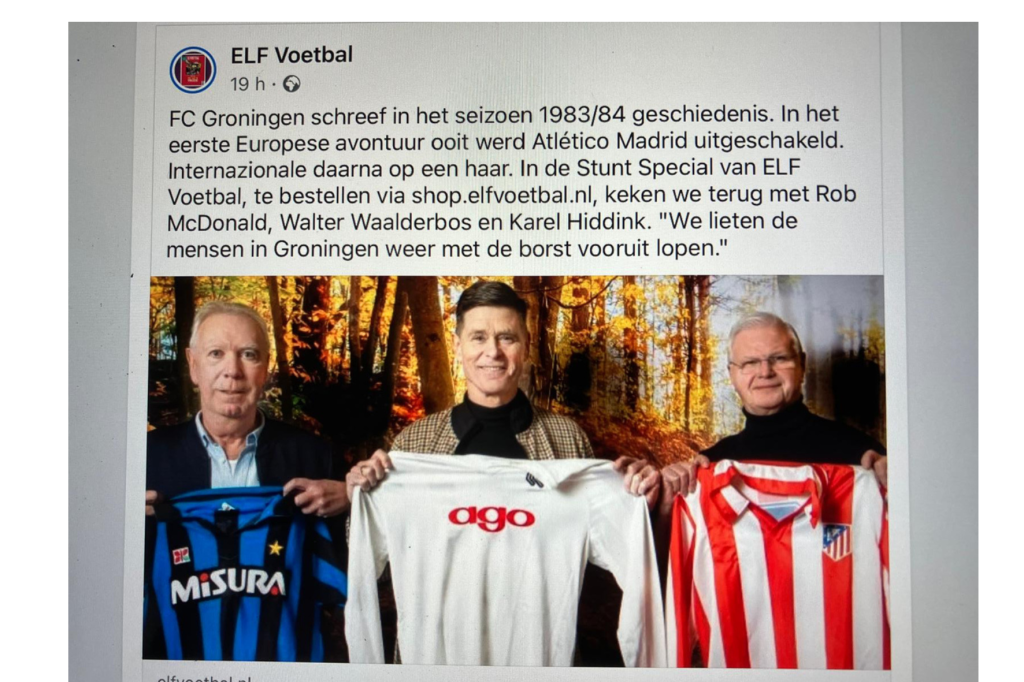
That made my second season at FC Groningen an important year. Not because I suddenly reached ‘the top’, but because I was getting closer. Closer to the level where you feel: now the real work begins. That season taught me a lot. About becoming a professional. About believing in yourself. About playing against big European clubs. About pride. But also about failure, pain and responsibility. And perhaps most of all: you never develop as a player on your own. You need self-belief, but you also need a team, a manager and an environment that can take you to another level.
A new manager, another step forward
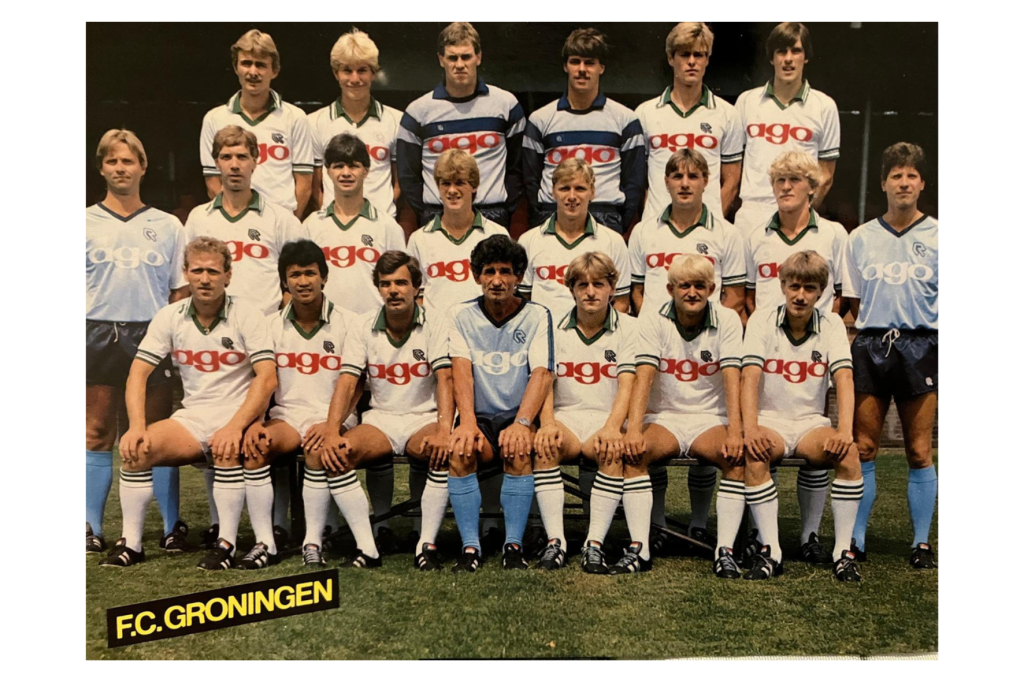
After my first season, a new manager arrived: Han Berger. He took over from Theo Verlangen, the manager who had guided FC Groningen into European football. That was an achievement in itself. But Han Berger brought a clear vision of his own.
The foundation stayed the same: attacking football. FC Groningen wanted to play on the front foot. Press. Be brave. Not sit back, but take the initiative. That suited me. I was a forward. I wanted to be a threat, score goals, work hard, compete and show what I could do.
But something important changed. Han Berger recognised that FC Groningen needed to take the next step as a club. The team had to develop gradually from a side with semi-professional players into a squad with more and more full-time professionals. That was no small change. It wasn’t just about training, but about mentality. How you live. How you recover. How you handle pressure. How seriously you take your profession.
In my second season, I was one of the full-time professionals. By the third season, almost the entire squad would be full-time. That was a strategic decision by Han Berger to take FC Groningen to a higher level.
And you could feel it.
Don’t get me wrong: there were good players and good performances in my first season too. It wasn’t as though there had been nothing in place before. Quite the opposite. FC Groningen had already qualified for Europe. But in my second season, you could feel that the club wanted to push on. More professional. Stronger. More consistent.
That was exactly the environment I needed.
New players, the same attacking spirit
New players joined us. Harry Schellekens came in as goalkeeper.
Adri van Tiggelen joined the defence.
In midfield, we had fellow Englishman Paul Mason.
Up front, the arrivals included Bud Brocken and Fandi Ahmad, our Singaporean star.
The squad gained strength, quality and depth.
Ronald Koeman left for Ajax. Yet the soul of the team stayed the same. FC Groningen weren’t a side that wanted to hide. Certainly not at the Oosterpark. You could feel the crowd’s energy there. That ground could be electric. When it was packed and the supporters got behind you, it did something to you as a player.
You felt: we’re not just FC Groningen.
We can hurt teams.
For me personally, the second season went better than the first. My body was holding up better. Injuries were less of an obstacle. I found my rhythm more and scored 15 goals that season. Later, in my third season, that would rise to 17.
You felt: we’re not just FC Groningen.
We can hurt teams
But numbers never tell the whole story. That second season wasn’t just about goals. It was about growth. About maturing as a professional. About the question: can I still perform when the occasion gets bigger? When the opposition gets bigger? When the pressure gets bigger?
Those questions came quickly.
Because we hadn’t drawn a small club in Europe.
We’d drawn Atlético Madrid.
Atlético Madrid: no fear, just enjoyment
The draw for the first round of the UEFA Cup was clear: Atlético Madrid. A big club. A name. A stadium. Opponents with history. When we travelled to Madrid, I felt no fear. Of course you knew you were playing a top club. Of course you could feel this was bigger than an ordinary league match. But above all, I wanted to enjoy it.
Bring it on!
And there I was. A lad who had once stood with a broom in his hands as an apprentice at FC Hull. A lad who had known disappointment and frustration in England too. I literally broke a broom there out of sheer frustration, because things weren’t going my way and I felt I had more in me. And now here I was: European football. Atlético Madrid. FC Groningen. That does something to you. In that match, I scored FC Groningen’s first European goal, and I couldn’t have been prouder.
I’ll never forget that moment. Not just because it was a goal. But because it felt like vindication. For all those years of work. For carrying on when things were tough. For continuing to believe that more was possible.
I’ll never forget that moment. Not just because it was a goal. But because it felt like vindication. For all those years of work. For carrying on when things were tough. For continuing to believe that more was possible.
Atlético Madrid then scored twice. One was an own goal by Walter, Wally, Waalderbos. We lost 2-1 away. But 2-1 away wasn’t a bad position to be in. Back home at the Oosterpark, it was still all to play for.
A packed Oosterpark against Atlético Madrid
The return leg against Atlético Madrid was played at a packed Oosterparkstadion.
That ground might have looked small to the outside world, but it felt huge when you were standing in it. Especially on European nights. The crowd were right on top of you. You could no longer pick out individual sounds, just one wall of noise.
And that crowd gave us something extra.
We believed.
Not just a little. Truly.
We went into the match feeling we could do it. Not hoping Atlético would have an off day, but taking control ourselves. Doing the pressing. Having the courage to play.
And that’s what we did.
We won 3-0.
The goals came from Ron Jans, Erwin Koeman and Jan van Dijk.
Those are matches you never forget. Not just because of the result, but because of the feeling. The pride. The bond between the players and the crowd. You felt we were doing something together that was bigger than one match.
FC Groningen had knocked out Atlético Madrid.
For a young player, that’s worth its weight in gold.
You learn that reputations don’t play football. Shirt colours don’t play football. History doesn’t play football. Out on the pitch, it’s about courage, organisation, quality and belief.
And after Atlético came the next big name. Inter Milan.
Inter Milan: another top club, another full house
As if Atlético Madrid weren’t enough, next came Inter Milan.
Another top European club. Another name any football fan respects. But again, the same rule applied: respect, yes; fear, no.
We played the first leg at home.
Another full house.
That atmosphere again.
That Oosterpark feeling again.
And once again, our attitude was right. We weren’t there to admire Inter. We were there to take them on.
That’s an important difference.
A lot of young players make the mistake of building big opponents up even more in their heads. Of course you should respect quality. But if you’re too impressed, you’re already starting to make yourself smaller.
We didn’t do that.
We won 2-0 at home.
The goals came from Ron Jans and Fandi Ahmad.
A brilliant position to be in. European football. Inter Milan beaten in Groningen. Belief was high.
But you still have the away leg to play.
And playing away in Europe against a top Italian club is a different matter.
Bari instead of San Siro
The away leg against Inter Milan wasn’t played at San Siro, but in Bari. That was because of previous crowd trouble. Of course it was a shame. Every footballer wants to play at San Siro. A stadium like that, a name like that, a temple of football like that — it’s what you dream of. But perhaps Bari could work in our favour too. A smaller ground. Different conditions. Perhaps less intimidating than San Siro. Or so we thought.
Until we went out for the warm-up.
There, we were on the receiving end of exactly what our own Oosterpark crowd normally did for us, only even more intensely. The noise, the pressure, the hostility, the energy of the stadium — it all came at us.
That’s European football.
That’s pressure.
That’s growing up.
We held firm in the first half: 0-0.
That was good. We were still in the game. With the 2-0 home win behind us, it was all in our hands.
But the second half became very tough.
Inter went 3-0 up.
Then everything changes. You feel the pressure rising. You sense the opposition know there’s more to be had. You hear the stadium getting even louder. You have to keep a clear head, but that’s exactly what becomes difficult in those moments.
With about eight minutes left, I scored to make it 3-1.
That away goal put us back ahead in the tie.
It’s almost impossible to explain. You’re under pressure. You’re 3-0 down. You make it 3-1. And suddenly, as things stand, you’re going through.
But then you have to hold on.
And we couldn’t.
Inter launched another huge assault on our goal. The pressure was immense. In the end, we lost 5-1.
Our UEFA Cup run was over.
Sometimes success and failure are eight minutes apart
That match against Inter Milan taught me a lot.
Not just about football, but about handling stress.
We were close. Very close indeed. My goal had put us back on the right side of the tie. But under enormous pressure, you have to function even better as a team. Stay calm. Communicate. Keep doing your job. Not just survive on character, but keep playing with clear heads too.
That’s easier said than done.
On paper, you can explain everything. In a team talk, you can point everything out. But when the stadium is rocking, the opposition keep coming and you feel the game slipping away, that’s when mental strength counts.
I learnt a lot about that.
And yet I also look back with pride.
I scored two goals against two top European clubs: Atlético Madrid and Inter Milan. Nobody can ever take that away from me. There was even interest from both clubs. But FC Groningen didn’t want to sell me at that point.
That’s part of football too.
Sometimes there’s interest. Sometimes an opportunity comes along. And sometimes the club decides you have to stay. As a player, you have to deal with that. You can be disappointed, but you also have to move on. Do your job. Help your team. Keep developing.
For me, the most important thing was that I could feel myself getting closer.
That lad with the broom, who had once nearly exploded with frustration because things weren’t going his way, was now attracting interest from top European clubs.
That was satisfying.
Not because I thought I’d made it. But because I felt: keeping going had been worth it.
On paper, you can explain everything. In a team talk, you can point everything out. But when the stadium is rocking, the opposition keep coming and you feel the game slipping away, that’s when mental strength counts.
The cup match that kept hurting...
Alongside Europe, we also had a good run in the KNVB Cup that season. We went a long way. But in the semi-final, we were knocked out by Fortuna Sittard. And honestly, that match hurt. It hurt a lot.
Not just because we lost. Losing is part of football. You can lose a match because the opposition are better. Because the ball just won’t go in. Because little things go against you. But this match felt different.
To me, it was one of our worst matches in terms of effort and the will to win. And that hit me hard. I don’t often cry over football, but throwing away a place in a cup final really hurt. You might not get to play many finals in your life. And when you feel you haven’t given everything you had, it stays with you.
That’s a different kind of pain from hitting the post or missing a chance. This goes deeper. It’s about the question: did we really do everything we could?
There’s a lesson in that for me too. Talent is great. A good team matters. A good manager helps. But ultimately, the will to win has to be there in every match. Especially when there’s something special at stake. Because some opportunities don’t come round again easily.
What young players can learn from this
If there’s one thing from this season I want to pass on to young players, it’s this:
Always keep believing in yourself, but never think you can do it alone.
You need self-belief. Absolutely. Without it, you won’t make it. Especially when you get injured. Especially when your first season is disappointing. Especially when others doubt you, or when you feel you’re not yet where you want to be.
But believing in yourself doesn’t mean you have to do everything alone. You need a good team. A manager with vision. Teammates who make you better. A professional environment. People who are honest with you. People who challenge you, but also give you confidence.
I benefited from Han Berger’s ambition to make FC Groningen more professional. That shift from semi-professional football towards more and more full-time players mattered. It brought a different standard. A different rhythm. A different way of thinking. And as a player, you grow with the standards around you.
That’s why I tell young players: choose your environment carefully. Don’t just look at where you can play now, but where you can improve. Who challenges you? Who helps shape your character? Who teaches you to handle pressure?
Because at a certain level, it’s no longer just about playing football.
Everyone can play a bit.
Everyone has talent.
Everyone wants to play.
But who keeps working when things get tough?
Who keeps believing after injuries?
Who stays calm under pressure?
Who gives everything in a semi-final?
Who keeps developing when bigger clubs show an interest?
Those are the questions that ultimately decide how far you go!
You don’t always win. You don’t always get the chance you want straight away. Sometimes you’re held back, sometimes tested, sometimes disappointed. But if you keep believing, keep working and have the right people around you, you can take steps you once thought impossible.
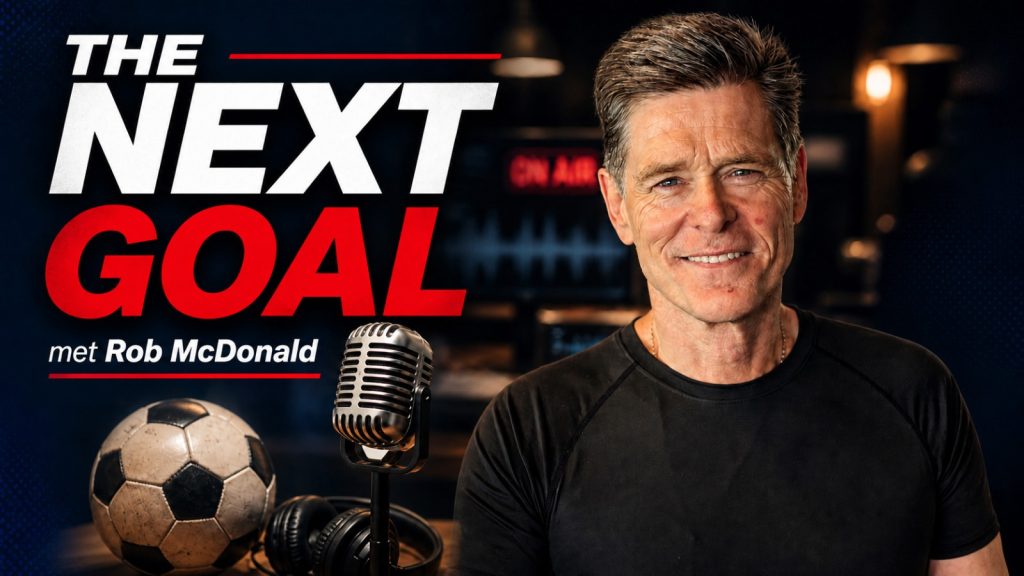
Watch The Next Goal™
Want more insights like these? Subscribe to my video podcast The Next Goal™. It’s not just about what you achieve, but who you become along the way. Visit The Next Goal™ with Rob McDonald.
In this series, I explore football, character, choices, mental strength, setbacks and the lessons you take from the pitch into life.
And take a moment to think about your next step.
As a player.
As a parent.
As a trainer.
As a coach.
Or simply as a person.
Because everyone has another match to play.