
Mental strength in football sounds like something abstract. Something you read or talk about. Until your personal choices are called upon – when the situation around you becomes unpredictable. That's when it counts. That's where the challenge lies. My time at Willem II showed me a new, challenging aspect of the reality behind the scenes of professional football.
It's not just what happens on the pitch that's decisive, but everything around it. A new environment, expectations, pressure, choices and situations that you don't always have control over. Such as serious financial problems at the club that can directly affect your career.
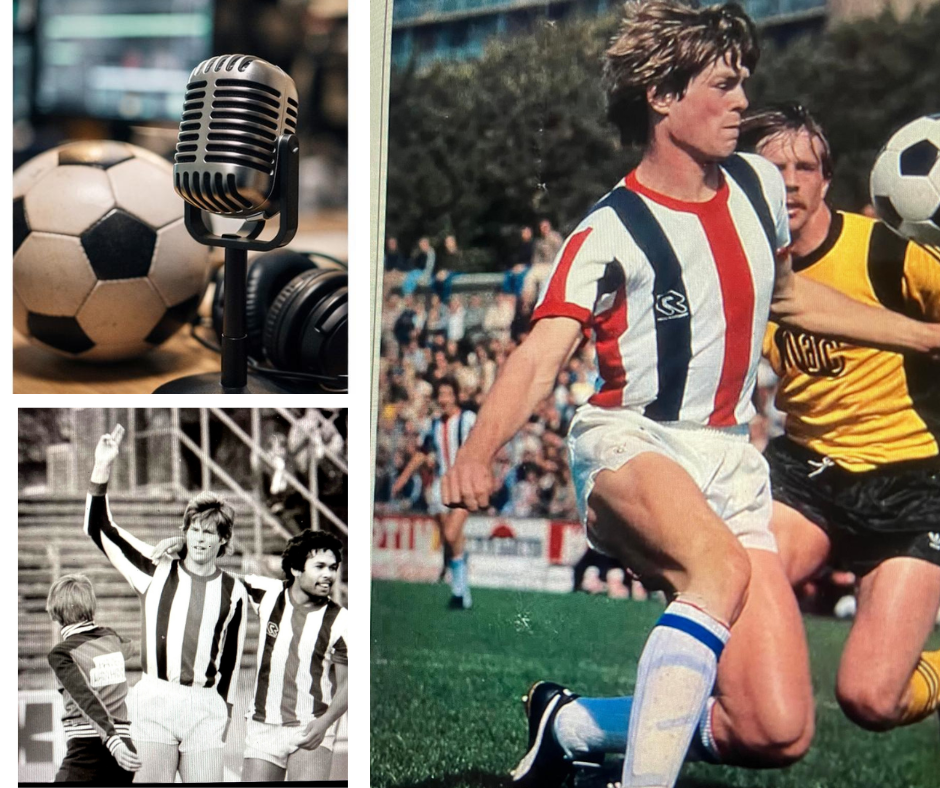
Differentiating dynamics
The move to Willem II meant starting all over again for me. New city, new club, new people. I lived alone in a flat high up in an apartment block and had to build everything up from scratch once more.
What immediately struck me: many Dutch players spoke excellent English. That made the transition a bit easier at first. You can communicate, you feel part of the group more quickly.
But soon I realised something important.
If you truly want to be part of a team, you need to understand more than just the instructions on the field. You experience the dynamics that make a difference behind the scenes. In conversations, in humour, in grumbling in the dressing room, in relationships with each other.
The conversations were... in Dutch.
I realised that I was missing important nuances after all.
That became a turning point for me. I knew: if I wanted to be fully involved here, I really had to learn Dutch well. And quickly too. Because it's precisely that mutual communication that determines how a team functions.
Jimmy Calderwood
And then there was that other foreign newcomer, Jimmy Calderwood, from Glasgow, Scotland. He would later become one of my best friends.
Everyone spoke good English… except Jimmy. Or rather: he spoke English, but in such a way that even I, as an Englishman, could barely follow him!
I still remember looking at him and saying “Jim, can you please speak English a bit slower? I really don't understand anything you're saying at all.”
He looked at me as if the problem lay entirely with me.
I said to himMan, I need subtitles when you talk.“
But after a few months, I suddenly began to understand him. Not because he changed, but because I increasingly realised what his strange language of sounds meant. I made the effort to understand him, and it worked.
That's exactly how it often works in football: you have to make an effort to understand each other.
Combat training as a weapon
Intense training took place on the field during that period. One exercise always stayed with me: heading practice with the so-called gallows.
For those who aren't familiar with it: a gallows was a training apparatus where a ball hung from a rope and kept spinning. If you hit the ball well with your head, it would come back by itself; if you missed, it wouldn't. The challenge for me was to hit the ball well ten times in a row.
That seems simple, but it wasn't.
You needed timing. Concentration. Power. Courage. And above all, a lot of repetition.
I trained there for MONTHS. After about three months, I managed to achieve that series of ten good headers in a row. That gave me confidence. Not only in the exercise itself, but also in matches.
This made heading a vital weapon in my game. It certainly contributed to my yield that season.
A note is in order here. This type of intensive heading training is no longer used in the same way today. Knowledge about the potential risks of repeated heading has changed. There is now much more attention paid to the relationship between heading, head impact, and possible brain injury later in life. In my day, there was less attention paid to that.
What was normal then in professional football would be judged differently today. That too is part of the reality behind the scenes of football: insights change, and good guidance means you keep learning.
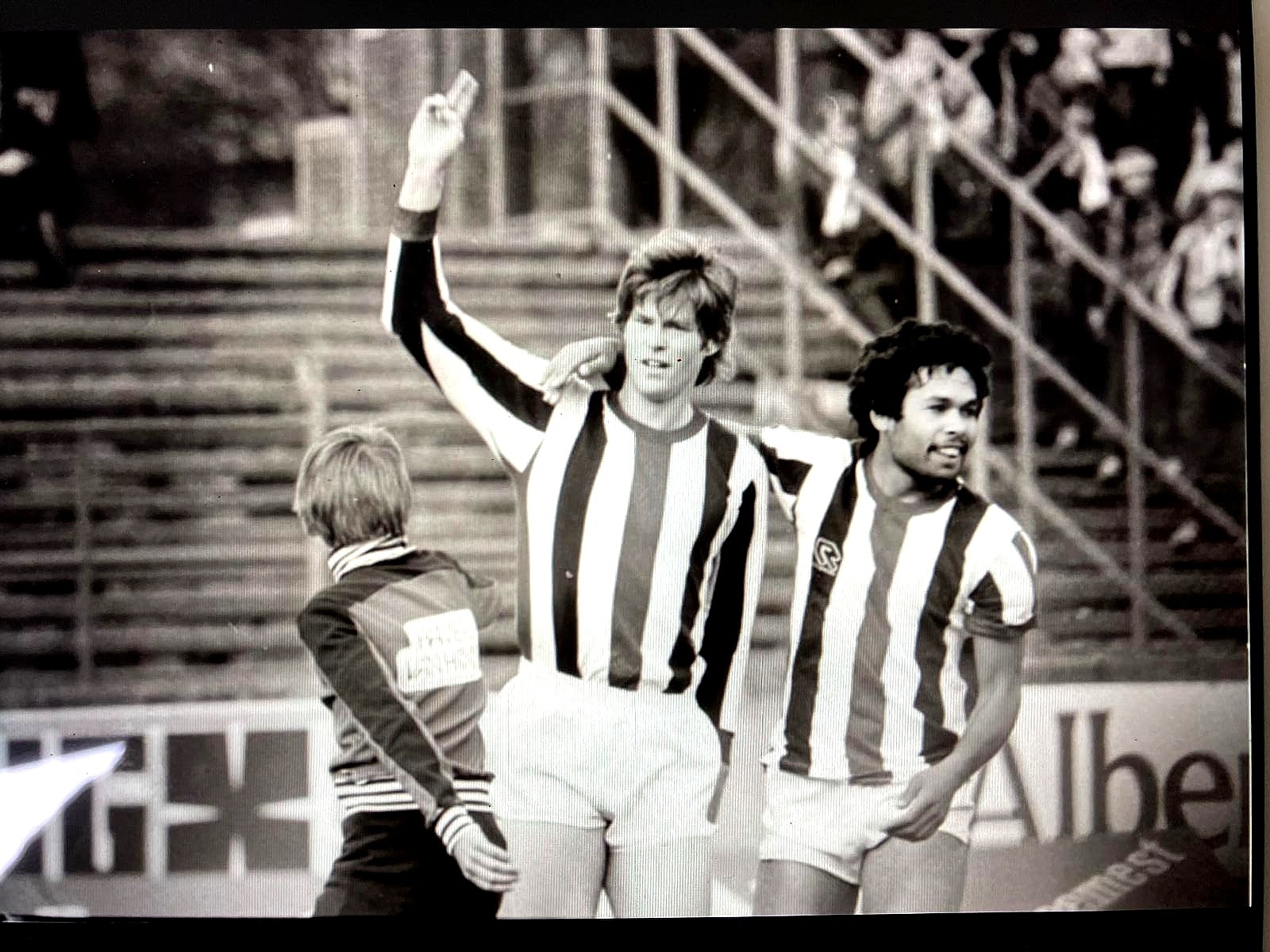
The insight
What was also a reality was that my first seven matches at Willem II weren't good.
I really didn't mean well, and I knew it myself.
The public's criticism was valid.
At the same time, something else was going on: Willem II had a popular young striker from the region, and the supporters wanted to see *him* play. They felt that I, as a paid professional, wasn't worth my money.
You can feel it.
And that only increases the pressure.
That's precisely where mental strength in football begins. Not when everything is going well, but when things are tough, that's when it counts.
After yet another defeat, a valuable conversation followed. Everything was laid bare. The players spoke their minds, honestly and directly. And I was also able to have my say: “Give me the ball then, so I can score!”
Afterwards, we went out for dinner together.
That moment changed something. The air had cleared, we became a real team. My relationship with the players improved and I was well-liked by the group. We respected each other. After every match, win or lose, we didn't go straight home but stayed together to debrief. A kind of post-match analysis, you could say.
The players' wives and girlfriends didn't quite fit in there. I remember an incident where one of the players' wives, a rather dominant type, walked into the changing room and demanded her husband, in front of the other players, to come home immediately. Mistake. The team, kindly but directly, showed her the door: “He’ll be here shortly, not now.” I don’t know how it ended up back at her place, but it showed that team spirit was strong and important to us.
The turnaround
The match that followed shortly afterwards was the match of the season: at home against rivals NAC.
We won 2-0.
I played strongly and scored twice. It was as if a great mental burden had been lifted from my shoulders.
21 goals for Willem II
With three games left in the season, we were safe, away to Go Ahead Eagles.
Ultimately, I scored 21 goals for Willem II that season.This made me third on the top scorers' list for the entire Eredivisie that year, behind Kees Kist and Wim Kieft. And the record for the most goals in a single season for Willem II is still held by me to this day. In that period, I owed a great deal to midfielder Toon Nelemans, an incredibly good left-footed player. He understood me very well and provided perfect assists. His support, insight, and confidence were of great value at that time.
Backstage drama
So from a sporting perspective, it was a strong year. But behind the scenes, there was a drama unfolding… Willem II was in serious financial trouble. As fully professional players, Jimmy Calderwood and I, along with two other professionals, were entitled to a substantial payment from the club through a statutory contribution to the players' fund. However, this payment failed to materialise.
In theory, we could have intervened forcefully. If we had stood our ground, we could even have had the club declared bankrupt.
But you don't just do something like that.
Not when you know what's at stake. Not just for yourself, but for the team, the staff, and the families behind the players.
We waived that compensation.
My transfer was also ultimately used to help cover a part of the club's large financial deficit. This, in part, allowed Willem II to continue to exist and carry on in the Eredivisie.
I then went – again – my own way, heading North, FC Groningen wanted me. I'd packed my bags quickly, I was finished in and with Tilburg.
Deepening
Looking back at that season, I see lessons that go beyond football:
• Adaptation is essential, on and off the field
• Language determines whether you truly become part of a team
• Behind the scenes, the groundwork is being laid
Trust and cooperation enable performance
• Sometimes football demands choices that are bigger than yourself
And perhaps most importantly: you learn the most in periods when nothing comes easily.
In short
Mental strength in football isn't just about performing on the pitch, but how you deal with everything that happens behind the scenes. Ultimately, my time at Willem II turned out to be a season of two halves. On one hand, sporting growth, goals and recognition. On the other, uncertainty, pressure, and a departure that didn't go as hoped. A season where everything came together: development, responsibility and raw reality.
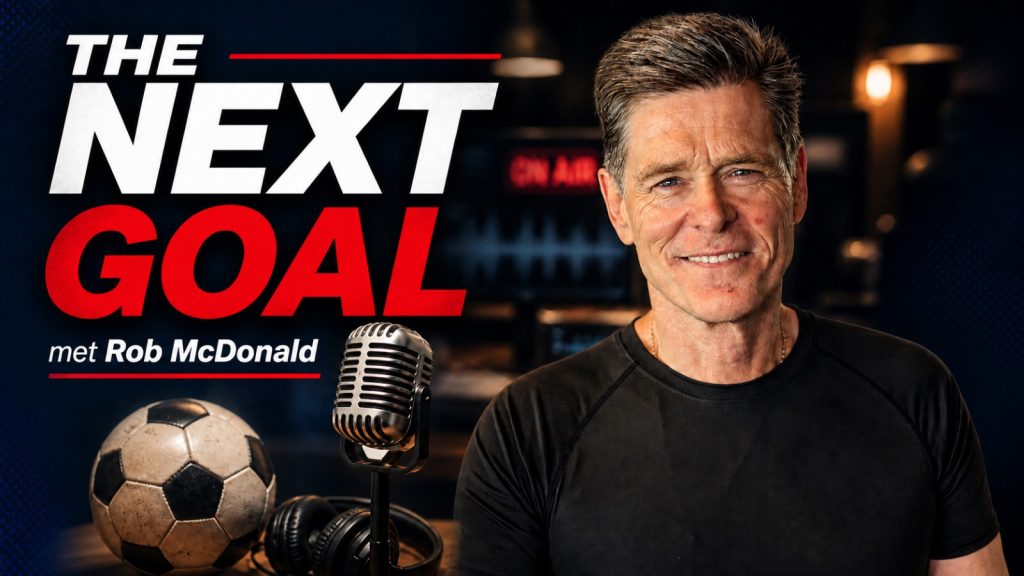
More insights like this?
Want more insights like this from the practice of elite sport and coaching?
Watch and listen then to the video podcast The Next Goal, in which I delve deeper into these lessons, along with other professors who want to share their insights with you.
Reflect on your own development: do you play to prove, or to grow?
The Next Goal is not just about what you achieve, but about who you become along the way.
FAQ
What does Rob McDonald mean by mental strength in football?
According to Rob McDonald, mental strength in football is not just about performing under pressure, but primarily about dealing with setbacks, criticism, uncertainty, and backstage situations over which you do not always have control.
Taal was om de volgende redenen erg belangrijk voor Willem II:
Whether Rob could truly become part of the team was determined by his language skills. It wasn't just the instructions on the pitch that were important, but also the conversations, humour, tension, and the group dynamic in the changing room.
What role did heading training play during Rob's time at Willem II?
Heading training became a significant part of Rob's development as a striker. Through intensive repetition, his timing, confidence, and scoring ability grew, although he now looks back on it with more nuance due to current knowledge about head impacts.
Why was the season at Willem II both sportingly and emotionally tough?
Sportingly, Rob scored 21 times and finished third on the Eredivisie top scorers' list. At the same time, the club faced financial problems, pressure from supporters, and choices that went beyond his own career.
What can young footballers learn from Rob's time at Willem II?
Young players can learn that success isn't just about talent. Adapting, communicating, building trust, tolerating criticism and making decisions under pressure are at least as important.
Where can I listen to more stories by Rob McDonald?
More stories and lessons from professional football can be heard in the vVideo podcast The Next Goal via RobMcPro.com.
 Dutch
Dutch  English
  German
  Portuguese